
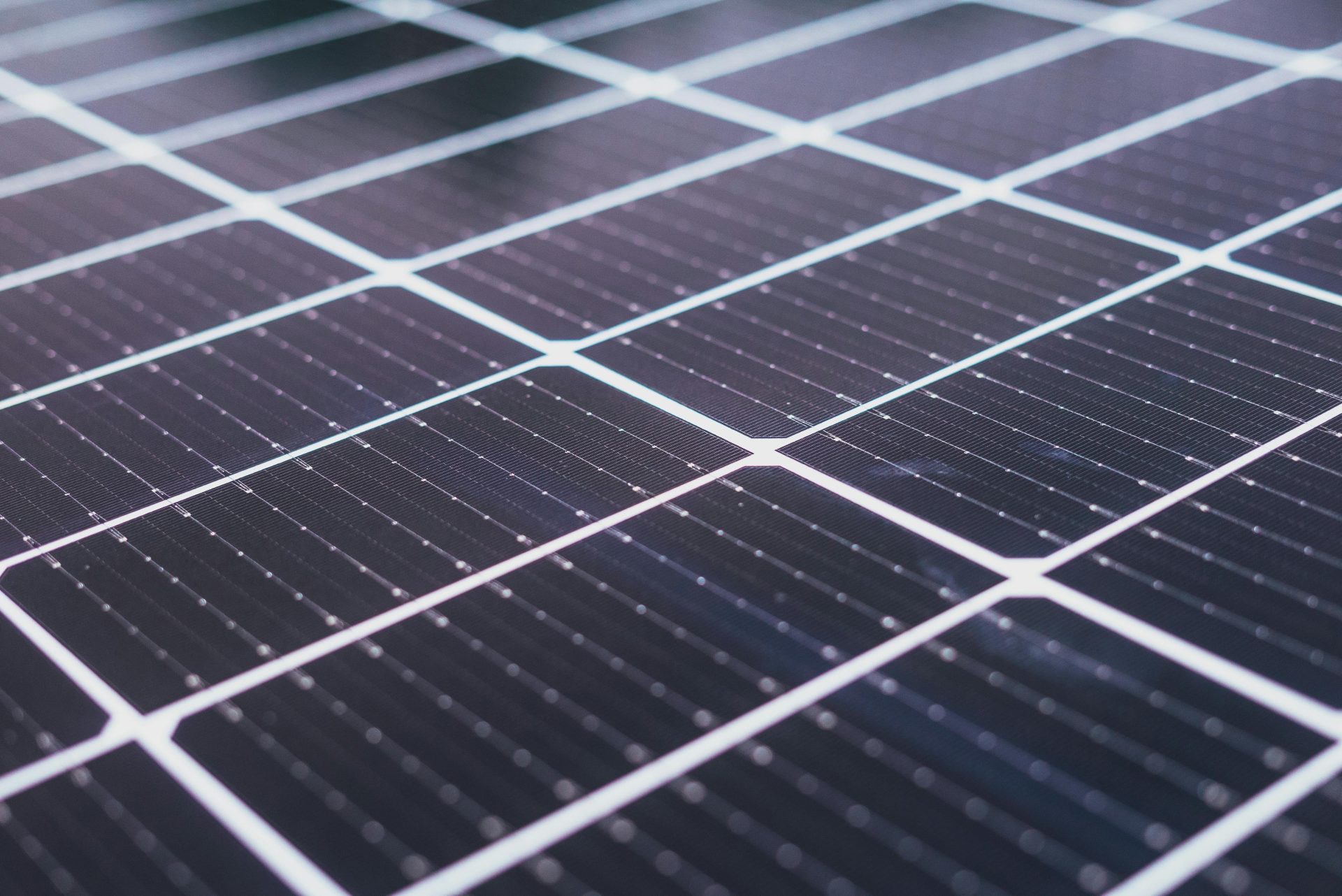

The best solar panel isn’t simply the one with the highest efficiency. Warranty strength, degradation, manufacturer stability, roof space and price all matter too.
Solar panel technology has moved quickly over the past few years. Standard residential panels now commonly exceed 22% efficiency, while some premium models are approaching 25%.
That means homeowners can fit considerably more generating capacity onto the same roof than was possible with older 350–400W panels.
But specifications only tell part of the story.
For most UK homes, paying substantially more for the world’s most efficient solar panel won’t necessarily produce the best financial return. A slightly less efficient panel from a reputable manufacturer, installed well and backed by a strong warranty, can be the better buy.
We’ve compared current residential panels based on:
- Efficiency
- Power output
- Degradation
- Product and performance warranties
- Panel technology
- Manufacturer track record
- Suitability for UK homes
- Overall value
Best Solar Panels UK: Our Top Picks
| Solar panel | Best for | Efficiency | Typical power | Key strength |
| AIKO Neostar 3S54 | Best overall | Up to 24.8% | 480–495W | Exceptional efficiency |
| Maxeon 7 | Best premium panel | Up to ~24% | Around 435–475W | 40-year warranty |
| JinkoSolar Tiger Neo 3.0 | Best high-efficiency value | Up to 24.52% | Up to 490W | High output without ultra-premium positioning |
| LONGi Hi-MO X10 | Best back-contact alternative | Up to 24.8%* | Around 490W residential variants | High efficiency and partial-shading technology |
| REC Alpha Pure-RX | Best for long-term performance | Up to 22.6% | Up to 470W | Low degradation and strong construction |
*Efficiency varies by Hi-MO X10 format. LONGi quotes up to 24.8% across the product family; don’t assume every residential X10 module achieves that figure.
[1] AIKO Neostar 3S54: Best Solar Panel Overall
Best for: Maximum output from limited roof space
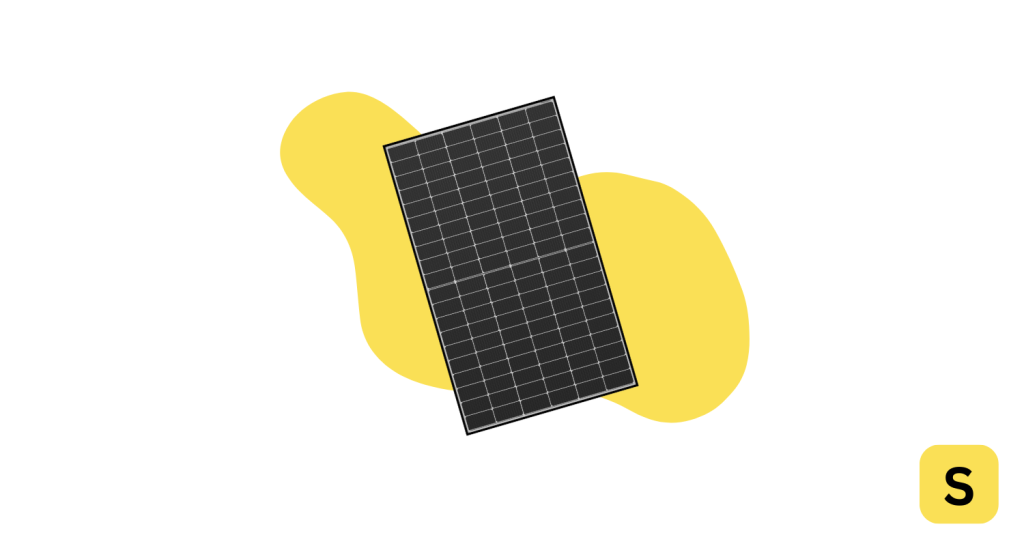
Key specifications:
- Technology: N-type ABC back-contact
- Power: 480–495W
- Efficiency: Up to 24.8%
- Temperature coefficient: -0.26%/°C
- Product warranty: 30 years
- Performance warranty: 30 years
AIKO has become one of the most interesting manufacturers in residential solar because its ABC, or All Back Contact, technology moves the electrical contacts away from the front surface of the cells.
That gives the cells more usable surface area for capturing sunlight while also producing the clean, grid-free appearance increasingly popular on domestic roofs.
The latest Neostar 3S54 reaches 495W from a standard 1,762 × 1,134mm residential module, giving it a maximum quoted module efficiency of 24.8%.
That’s exceptionally high for a commercially available residential panel.
Why we rate it
The biggest advantage is straightforward: power density.
If your roof can only accommodate ten panels, improving the output of each panel can matter far more than it does on a large, unobstructed roof.
AIKO also quotes a relatively strong temperature coefficient of -0.26%/°C, meaning output falls less as panel temperature increases compared with many older modules.
The Neostar range also incorporates partial-shading optimisation designed to reduce the impact of shading across individual cells.
What’s the catch?
High-efficiency panels normally cost more.
If you have plenty of usable roof space, spending extra simply to move from a good 22–23% panel to a 24%+ model may produce a poor marginal return.
SolarAdvice verdict: Our best overall panel for 2026 if roof space is the limiting factor.
For a deeper explanation of why efficiency matters, see our guide to solar panel efficiency.
[2] Maxeon 7: Best Premium Solar Panel
Best for: Warranty, durability and long-term ownership
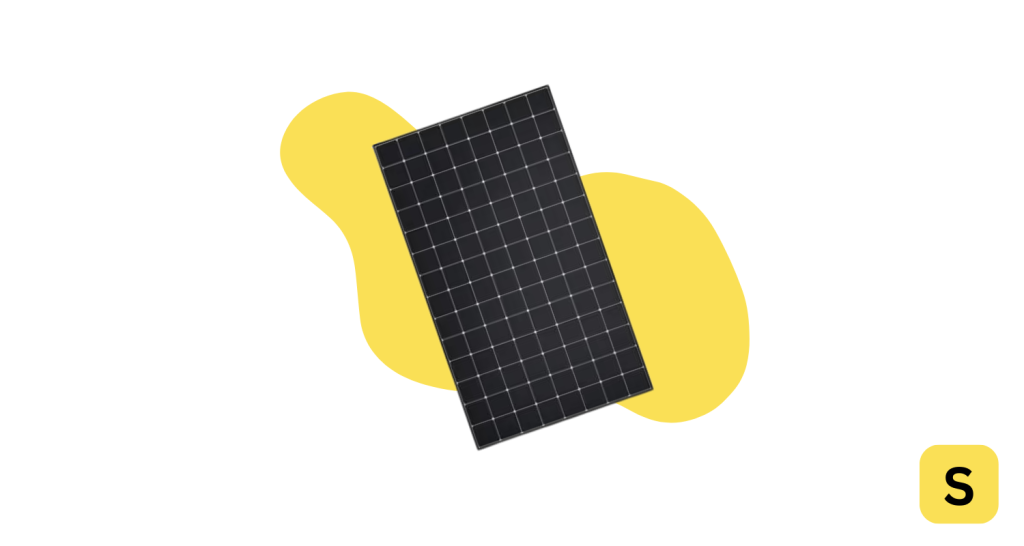
Key specifications:
- Technology: Maxeon IBC cells
- Efficiency: Around 24%, depending on model
- Power: Approximately 435–475W depending on specification
- Product warranty: Up to 40 years
- Performance warranty: Up to 40 years
- Maxeon has long occupied the premium end of the solar market.
Its Maxeon 7 panels use interdigitated back-contact cells, moving the electrical contacts to the rear and allowing more of the front surface to collect sunlight.
Commercial Maxeon 7 specifications reach around 24% module efficiency, while independently tested development modules have achieved even higher figures.
But efficiency isn’t the main reason we’d consider Maxeon.
It’s the warranty.
Maxeon’s current warranty documentation provides up to 40 years of product and performance coverage on qualifying Maxeon panels. citeturn641597search9
Why we rate it
Solar panels are a multi-decade purchase.
A meaningful warranty from a manufacturer likely to support the product can therefore matter more than squeezing an extra few watts from each panel.
Maxeon’s IBC architecture is also designed with a metal backing that improves resistance to cracking and corrosion.
One important SunPower distinction
Older articles often refer to these as SunPower Maxeon panels.
That terminology now needs care.
Maxeon Solar Technologies and the former US SunPower Corporation are separate businesses, and SunPower Corporation entered bankruptcy proceedings in 2024.
Maxeon itself explains that warranty responsibility for certain historic SunPower products differs from warranties on Maxeon-branded products.
So when comparing quotes, check exactly which manufacturer and warranty entity stands behind the panel.
SolarAdvice verdict: Probably the strongest choice for buyers who prioritise warranty and long-term panel construction over lowest upfront cost.
[3] JinkoSolar Tiger Neo 3.0: Best High-Efficiency Value Option
Best for: High efficiency without automatically moving into the ultra-premium category

Key specifications:
- Technology: Next-generation N-type TOPCon
- Power: Up to 490W
- Efficiency: Up to 24.52%
- Temperature coefficient: -0.26%/°C
- Annual degradation: Around 0.35% on relevant models
- Construction: Dual-glass options available
JinkoSolar’s latest Tiger Neo 3.0 is a significant step forward from the older Tiger Neo modules still found in many comparison articles.
Current European residential models reach up to 490W and 24.52% efficiency while retaining the familiar 1,762 × 1,134mm residential format. citeturn546753search0
That makes Jinko particularly interesting for homeowners who want near-premium power density without necessarily paying for boutique panel technology.
Why we rate it
Jinko’s advantage is scale.
Rather than being a small premium manufacturer specialising in one unusual cell architecture, Jinko is one of the world’s largest solar manufacturers.
The Tiger Neo 3.0 combines that manufacturing scale with genuinely competitive technical specifications.
Its -0.26%/°C power temperature coefficient is also strong for a mainstream residential panel.
Who should consider it?
Tiger Neo makes particular sense where:
- roof space is limited
- you want modern N-type technology
- your installer can source it competitively
- the quote is substantially cheaper than AIKO or Maxeon
SolarAdvice verdict: One of the most compelling price-to-performance panels to look for in 2026.
[4] LONGi Hi-MO X10: Best Back-Contact Alternative
Best for: High power density and sophisticated shading performance
Key specifications:
- Technology: N-type HPBC 2.0 back-contact
- Residential output: Around 490W depending on variant
- Maximum family efficiency: Up to 24.8%
- Temperature coefficient: -0.26%/°C
- First-year degradation: Around 1%
- Subsequent degradation: Around 0.35% annually
- Power warranty: Up to 30 years
LONGi’s Hi-MO X10 uses its second-generation Hybrid Passivated Back Contact technology.
As with AIKO and Maxeon, moving electrical contacts away from the front of the cell allows more of the available area to capture sunlight.
LONGi quotes efficiencies of up to 24.8% across the X10 range, alongside a -0.26%/°C temperature coefficient and a 30-year power warranty on relevant European products.
Particularly interesting: shading
LONGi has designed the X10 to reduce power losses and hotspot temperatures when parts of the module are shaded.
That’s potentially useful on UK roofs affected by chimneys, dormers or nearby trees.
However, don’t confuse cell-level shading improvements with a complete substitute for good system design.
If your roof experiences substantial partial shading, panel choice is only one part of the solution. The inverter architecture may matter even more.
Read our guide to microinverters and solar panel optimisers if shading is a concern.
SolarAdvice verdict: An impressive alternative to AIKO for homeowners looking specifically at next-generation back-contact panels.
[5] REC Alpha Pure-RX: Best for Low Degradation
Best for: Long-term output retention
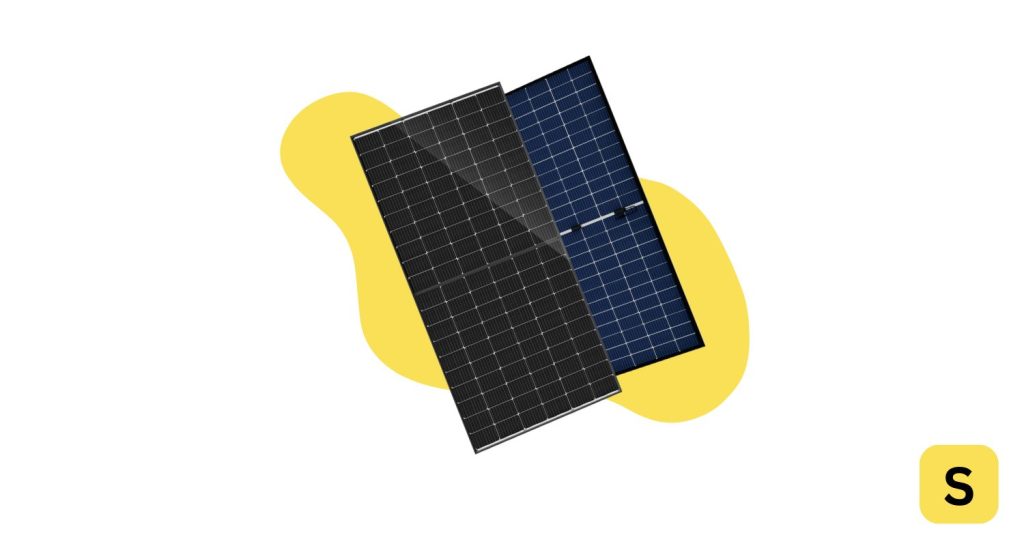
Key specifications:
- Technology: Heterojunction (HJT)
- Power: 450–470W
- Efficiency: Up to 22.6%
- Annual degradation: 0.25%
- Output after 25 years: At least 92%
- Product warranty: 20 years as standard
- Performance warranty: 25 years
- Enhanced ProTrust warranty: Available through qualifying installers
REC’s Alpha Pure-RX isn’t the efficiency leader anymore.
That’s important, because older comparisons sometimes treat 22–23% as exceptional. In 2026, several competing products exceed 24%.
But efficiency isn’t REC’s main selling point.
The Alpha Pure-RX’s standout specification is its 0.25% warranted annual degradation, with REC guaranteeing at least 92% of nominal output in year 25.
It also uses heterojunction cells and a reinforced frame capable of handling substantial mechanical loads.
Warranty caveat
The standard product warranty is 20 years.
REC’s ProTrust package can extend product and labour coverage to 25 years, but only where eligibility requirements are met, including installation by an REC Certified Solar Professional.
Always compare the warranty actually included in your quote, not the longest warranty advertised somewhere on the manufacturer’s website.
SolarAdvice verdict: Not the highest-efficiency panel here, but one of the strongest options if you care about long-term warranted output.
[6] Trina Solar Vertex S+: Best Mainstream N-Type Panel
Best for: A capable, proven residential system without chasing headline specifications
Key specifications:
- Technology: N-type i-TOPCon
- Power: Up to around 455W on the referenced residential range
- Efficiency: Up to 22.8%
- Product warranty: Up to 25 years
- Power warranty: 30 years
- Construction: Dual glass
- Year-30 warranted output: 87.4%
Trina’s Vertex S+ demonstrates why buying solar solely from an efficiency leaderboard isn’t always sensible.
At up to around 22.8% efficiency, the relevant Vertex S+ generation isn’t as technically spectacular as AIKO, Jinko or Maxeon.
But it’s still a highly efficient modern N-type panel backed by a huge established manufacturer.
Trina combines N-type i-TOPCon cells with dual-glass construction, a 25-year product warranty and 30-year performance warranty on the relevant range.
Why consider it?
Because solar panels are part of a system, not a spec-sheet competition.
If your installer offers a well-designed Trina system for £1,500 less than an equivalent premium-panel installation, the cheaper system could easily provide the better financial return.
SolarAdvice verdict: A strong mainstream choice where pricing is competitive.
🚀 Which Solar Panel Is Actually Best?
For most homeowners, we’d split the market like this:
- Best overall: AIKO Neostar
Choose AIKO if your roof space is limited and you want to maximise installed capacity.
- Best premium choice: Maxeon 7
Choose Maxeon if warranty length, panel construction and long-term ownership matter more than upfront price.
- Best high-efficiency value: Jinko Tiger Neo 3.0
The latest Tiger Neo combines extremely competitive efficiency with the scale of a major global manufacturer.
- Best long-term output warranty: REC Alpha Pure-RX
REC stands out more for degradation and warranty structure than raw headline efficiency.
- Best mainstream option: Trina Vertex S+
A sensible choice when offered at the right installed price.
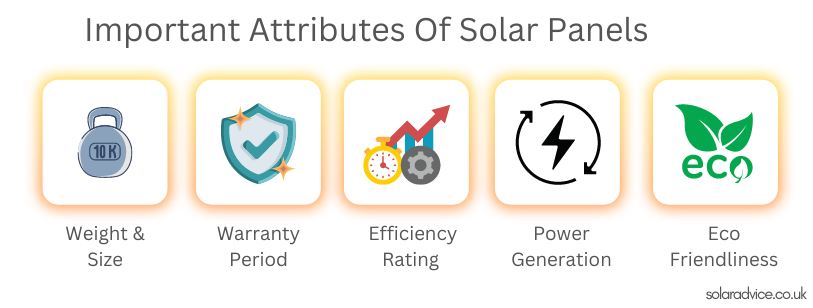
How We Chose the Best Solar Panels
It’s tempting to rank panels by efficiency and stop there.
We don’t think that’s useful.
Here’s what matters more.
1. Solar Panel Efficiency
Efficiency tells you how much of the sunlight falling onto a panel is converted into electricity.
A 24% efficient panel produces more electricity from the same physical area than a 21% efficient panel.
That matters most when roof space is limited.
It matters much less if you’ve got plenty of unobstructed roof area and could simply fit another panel.
For more detail, read How Efficient Are Solar Panels?
2. Power Output
Panel wattage tells you its rated output under standard laboratory test conditions.
Modern domestic panels typically sit somewhere around the 430–500W mark, although physical dimensions vary.
Don’t compare wattage without comparing panel size.
A 500W panel that’s significantly larger isn’t automatically more efficient than a 450W panel.
3. Degradation
Solar panels gradually lose generating capacity as they age.
The important figure is therefore not only what a panel produces when new, but what the manufacturer guarantees it will still produce after 25 or 30 years.
Premium degradation warranties can retain around 90%+ of original rated capacity after 25 years.
4. Product Warranty vs Performance Warranty
These are not the same thing.
A product warranty covers defects in the physical module.
A performance warranty guarantees that output won’t decline beyond a specified level.
A 30-year performance warranty therefore doesn’t necessarily mean the manufacturer will replace a physically faulty panel for 30 years.
Always check both.
5. Manufacturer Strength
A 40-year warranty is only valuable if someone exists to honour it.
The solar industry provides a useful warning here.
LG was once routinely ranked among the world’s best panel manufacturers, including in the previous version of this guide, but LG exited the solar-panel manufacturing business in 2022.
Panasonic also ended its own photovoltaic manufacturing operations in 2022.
That doesn’t make existing LG or Panasonic panels bad products.
It does mean we no longer think either belongs on a list of the best solar panels to buy new in 2026.
Manufacturer stability matters.
6. Installation Quality
The panel itself is only one component.
A superb panel connected to a badly designed inverter, fitted on the wrong roof elevation or installed poorly can perform worse than a cheaper module in a properly designed system.
Before choosing an installer, read our guide to the MCS certificate for solar panels and our guide explaining how solar panels are installed.
🎥 Check out our video review of the best solar panels in the UK:
Related solar guides:
- How many solar panels do you need?
- Smart Export Guarantee
- Can you install solar panels in a conservation area?
- Best 4kw solar system with battery storage
- Sunshine hours map UK
- Best Solar Panels
- Solar panel output calculator
Are High-Efficiency Solar Panels Worth Paying More For?
Sometimes.
Imagine two identically sized panels:
- Panel A: 450W
- Panel B: 495W
Ten Panel A modules give you a 4.5kWp array.
Ten Panel B modules give you a 4.95kWp array.
If ten panels are all your roof can physically accommodate, that difference is useful.
But if your roof can comfortably accommodate eleven or twelve cheaper panels, paying a large premium for Panel B may make little financial sense.
This is why we wouldn’t choose a solar system using panel efficiency alone.
Get the installer to compare:
- total system capacity
- predicted annual generation
- roof area used
- installed price
- estimated self-consumption
- expected export
- warranty
- cost per generated kWh
That produces a far more meaningful comparison.
How Many Solar Panels Does a UK Home Need?
There isn’t a reliable answer based solely on whether your house has one, three or five bedrooms.
System sizing should instead consider:
- annual electricity consumption
- usable roof area
- panel wattage
- roof direction
- shading
- geographical location
- whether you own an EV
- whether you use or plan to install a heat pump
- whether battery storage is included
A typical domestic system may be around 4–5kWp, but your optimum system could be smaller or substantially larger.
Use our full guide to work out how many solar panels you need.
How Much Do Good Solar Panels Cost?
It’s more useful to price the whole installed system than individual panels.
The panel modules themselves are only part of the quote.
You also pay for:
- inverter
- mounting equipment
- scaffolding
- electrical equipment
- cabling
- labour
- design
- certification
- DNO paperwork
- warranties
- optional battery storage
Most UK households currently pay roughly £5,000–£8,000 for a professionally installed 4–6kW solar PV system, although equipment choice and installation complexity can push costs outside that range.
See our regularly updated guide to solar panel costs in the UK for current pricing.
Should You Add a Solar Battery?
A battery isn’t required for solar panels to work.
Without one, your home uses solar electricity as it’s generated and exports surplus electricity to the grid.
A battery lets you store some of that surplus for later.
Whether that’s worthwhile depends on:
- battery price
- electricity usage pattern
- import tariff
- export tariff
- battery capacity
- round-trip efficiency
- expected battery lifespan
Don’t assume adding a battery automatically improves the financial return.
In some households it will. In others, a solar-only system produces the faster payback.
Compare the numbers using our guide to solar panel and battery costs.
Don’t Forget Your Export Tariff
Any electricity your home doesn’t use or store can normally be exported.
Eligible households can receive payment under a Smart Export Guarantee tariff.
Rates and eligibility vary substantially between suppliers, and some of the highest rates require you to buy electricity from the same supplier or meet additional conditions.
So don’t simply accept the first export tariff you’re offered.
Compare the latest Smart Export Guarantee rates before applying.
Black vs Blue Solar Panels
Most premium residential modules are now monocrystalline panels with a predominantly black appearance.
The old distinction between cheap blue polycrystalline panels and premium black monocrystalline modules has become much less relevant because modern residential installations are overwhelmingly based around monocrystalline technologies such as:
- TOPCon
- HJT
- IBC
- ABC
- HPBC
If appearance matters, you may still want a fully black module with black frame and backsheet rather than a panel where silver cell connections remain visible.
Read our comparison of black vs blue solar panels and our guide to all-black solar panels.
Best Solar Panels UK FAQs
How much does a solar panel installation cost?
A 3kW solar panel system, costing between £5,000 to £6,000, is sufficient to meet the energy needs of a small household with 1-3 residents.
This system can help you save approximately £160 per year on your electricity bills.
For larger households with 4 or more people, a 6kW solar panel system is recommended.
The cost for this system is likely to range between £8,000 to £10,000.
On average, you can expect to save about £430 on your electricity expenses each year.
Pro tip: Avoid upsells and confusing packages – choose a provider with a clear, fixed-price quote that won’t change. Heatable, a Which?-approved solar installer, offers transparent pricing with no surprises.
What types of solar panels are best to install in the UK?
The two most common options for solar panels in the UK are monocrystalline and polycrystalline.
Monocrystalline panels are known for their high efficiency, converting between 15% and 20% of the sun’s energy into usable power.
They are also more space-efficient, producing more energy per unit area than polycrystalline panels.
However, their higher efficiency and pure silicon material result in a higher cost.
On the other hand, polycrystalline panels are less efficient but more affordable, as their silicon material is less pure.
They also have a greater temperature tolerance, producing more electricity over the year.
Ultimately, the choice between the two depends on factors such as budget and available space.
Do you need battery storage?
Battery storage systems allow homeowners to store solar energy for later use – typically in the evening or during peak tariff periods. Key benefits include:
- Greater energy independence
- Reduced reliance on grid electricity
- Ability to use a higher percentage of generated solar power
- Eligibility for Smart Export Guarantee (SEG) payments on exported surplus
While not essential, batteries can significantly enhance the return on investment for many households.
Recommended reading:
How Many Solar Panels Does The Average UK House Need?
The true answer is that it depends on the size of your property and your energy demands.
Annual electricity usage is measured in kilowatt-hours (kWh); therefore, we can use these average figures based on the property size to work out how many solar panels you will need to generate a sufficient amount of power.
In the table below, we have provided an estimate of how many panels you will require based on your property type:
| Household Size | Annual Electricity Usage | Number of Solar Panels | Size of Solar Panel System |
|---|---|---|---|
| 1 bedroom | 1,800 kWh | 6 | 2.1 |
| 3 bedrooms | 2,900 kWh | 10 | 3.5 |
| 5 bedrooms | 4,300 kWh | 14 | 4.9 |
Table data source: Energy Guide UK
How Long Do Solar Panels Last in the UK?
Most high-quality solar panels last 25–30 years, with gradual efficiency decline over time.
Panels from premium brands like Maxeon or LG are designed to retain 85–90% of their original output after 25 years.
Regular cleaning, professional installation, and a good inverter can extend the system’s lifespan and maintain strong performance.
SolarAdvice Verdict: Which Solar Panels Should You Buy?
If we were choosing purely on panel technology in 2026, AIKO Neostar would currently be our first choice for most space-constrained residential roofs, with Jinko Tiger Neo 3.0 and LONGi Hi-MO X10 offering particularly strong alternatives.
For buyers prioritising long-term warranty protection, Maxeon 7 remains extremely difficult to beat.
REC Alpha Pure-RX is compelling where low degradation matters, while Trina Vertex S+ demonstrates that you don’t need the highest-efficiency panel on the market to build an excellent solar system.
But here’s the part that matters most:
Don’t spend £1,000–£2,000 extra on a solar installation just because one panel is a percentage point more efficient.
Compare the complete system.
A well-priced 22.5% panel installed on the right roof with a good inverter can be a much better investment than a 24.5% panel in an overpriced or badly designed package.
Before accepting a quote, compare:
- Total installed kWp
- Predicted annual generation
- Panel efficiency
- Panel degradation
- Product warranty
- Performance warranty
- Inverter
- Battery specification
- Installation warranty
- MCS certification
- DNO arrangements
- Total installed price
Then decide whether the premium equipment is actually buying you enough additional generation or protection to justify the cost.
That’s a better way to choose the best solar panels for your home than simply picking whichever panel currently sits at the top of an efficiency table.
Related Guides from SolarAdvice.co.uk:
- How Many Solar Panels Do You Need?
- Smart Export Guarantee Explained
- Can You Install Panels in a Conservation Area?
- Best Solar Panels with Battery Storage
- All-Black Solar Panels vs Standard Panels
- Solar Inverter Costs Explained
Related reading: