

Solar panels do not need hot weather to work, but they do need daylight. That means your location can affect how much electricity your solar panel system generates over the year.
In general, homes in the south of England receive more annual sunshine and solar radiation than homes in northern Scotland. However, solar panels can still work well across the UK, including in less sunny areas, because modern solar PV panels generate electricity from daylight as well as direct sunshine.
The key difference is not whether solar panels work in your area, but how much electricity they are likely to produce each year, and how long they may take to pay back.
UK sunshine hours map
The map below shows how solar radiation varies across the UK over the course of a year. Areas with higher annual solar radiation will usually generate more electricity from the same solar panel system, assuming the roof angle, orientation, shading and system size are similar.
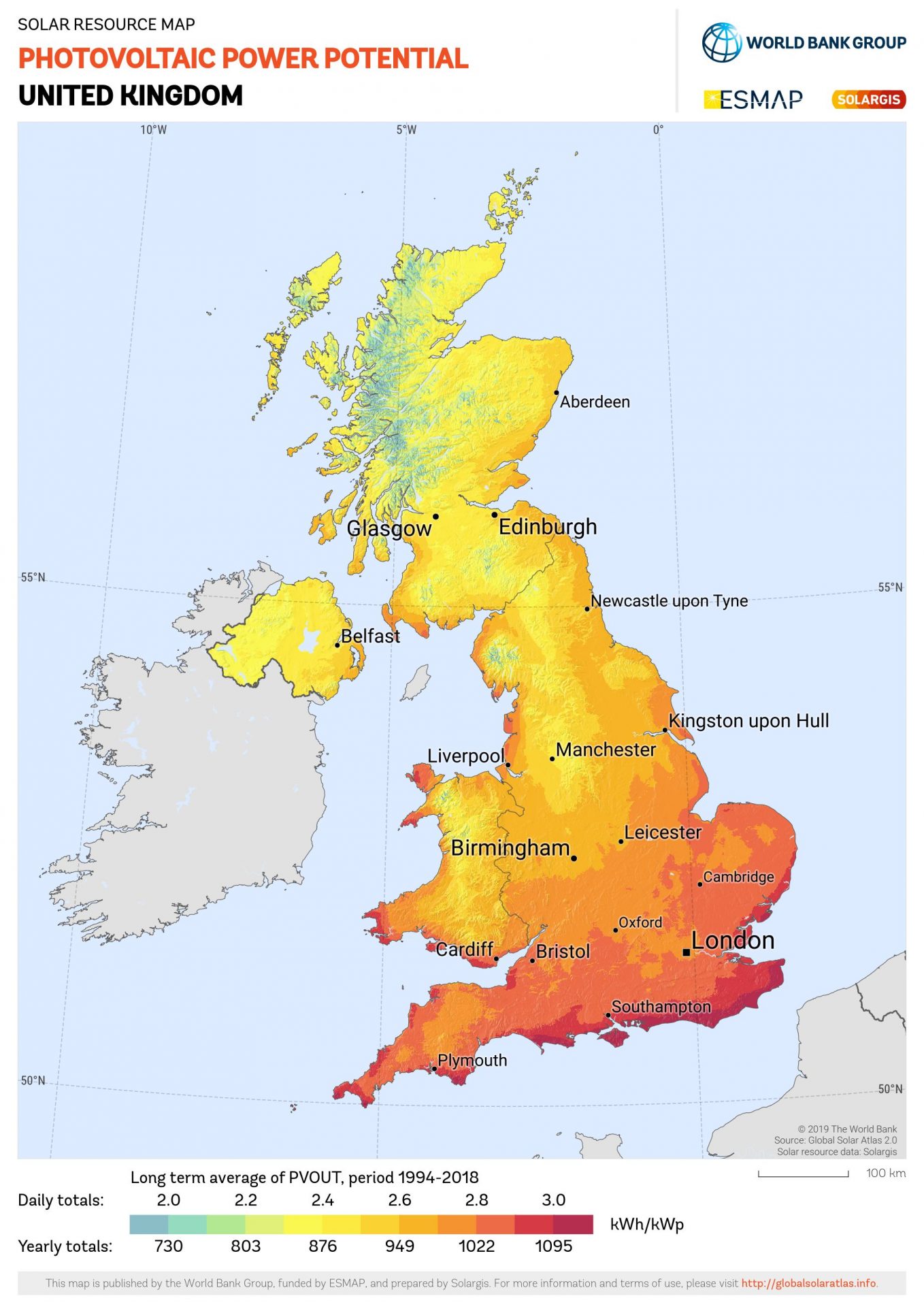
The Met Office provides long-term UK climate averages for sunshine hours, while PVGIS provides location-based solar radiation and PV output estimates.
Both show the same broad pattern: the south and east of England generally have stronger solar potential than northern and western parts of the UK.
Which parts of the UK get the most sunshine?
The sunniest parts of the UK are typically found along the south coast, South East England, East Anglia and parts of the South West. These areas tend to receive more annual sunlight, which can increase the yearly output of a solar PV system.
Less sunny areas, such as northern Scotland, western Scotland and parts of Northern Ireland, may generate less electricity from the same size system.
However, that does not mean solar panels are unsuitable. It simply means the estimated annual output and payback period should be calculated using local conditions rather than UK-wide averages.
Are solar panels worth it everywhere in the UK?
Yes, solar panels can be worth it across the UK, but the return will vary by location.
A solar panel system in Cornwall, Devon or Kent is likely to generate more electricity each year than an identical system in the Highlands or Shetland. That can shorten the payback period because the household offsets more grid electricity and may export more surplus power.
However, location is only one factor. Your actual solar output also depends on:
- roof direction
- roof angle
- shading from trees, chimneys or nearby buildings
- system size
- panel efficiency
- inverter performance
- local electricity rates
- export tariff payments
- how much solar electricity you use at home
This is why two homes in the same postcode can still get different results.
How sunshine hours affect solar panel payback
The more electricity your solar panels generate, the faster they can usually pay for themselves. A typical UK solar panel payback period is often around 8 to 12 years, but this can be shorter in sunnier areas and longer in areas with lower annual solar generation.
For example, a home in the South West of England may see a better annual yield than a similar home in northern Scotland.
The Scottish system may still be worthwhile, but the break-even point could be several years later, depending on installation cost, export payments and household electricity usage.
Sunshine hours are useful, but they are not the full story
Sunshine hours are a helpful guide, but solar radiation is the more important measure for solar panels.
Sunshine hours measure how long the sun shines, while solar radiation measures the amount of solar energy reaching a surface. The Met Office notes that sunshine and solar radiation are measured differently, with radiation measured using a pyranometer.
For solar panels, this matters because panels can still produce electricity on cloudy days, just at a lower output. A cloudy but bright day can still generate useful electricity.
How to estimate solar output for your home
The best way to estimate solar panel output is to use your postcode, roof direction, roof pitch and shading profile. Tools such as PVGIS can estimate yearly, monthly and hourly PV energy production for a given location, including expected system losses.
As a rough rule, if your home has a mostly south-facing, unshaded roof, solar panels are more likely to perform well. East- and west-facing roofs can also work, especially if your electricity use is spread across the day.
Bottom line
The UK is not equally sunny everywhere, but solar panels can still generate electricity in every part of the country. Homes in sunnier areas will usually get higher annual output and faster payback, while homes in less sunny areas may need a more careful calculation.
The most important thing is not the national average. It is your own roof, your postcode, your electricity usage and the system design.
Related solar guides: